

In the world of traditional hand-weaving, production isn’t measured in hours. It is measured in sun-cycles. A single ramie hammock from Vietnam takes approximately 30 days to complete. It is a slow transformation from a garden plant into a functional heirloom – a process that has remained largely unchanged for centuries.
There are no shortcuts. To understand the object, you must understand the journey.
1. Harvesting the Raw Fiber
The process begins with the Ramie plant (Boehmeria nivea), known locally in Vietnam as cây gai. While it grows wild in the highlands, it is now commonly nurtured in home gardens. These perennials can be harvested three to four times a year for decades. We only cut stalks that have reached full maturity – usually around 2 meters high – to ensure the maximum tensile strength. This strength – 7 times stronger than silk – is what allows ramie to outlast almost any other natural fiber.

2. Stripping the Bark
Once harvested, the outer bark is stripped away to reveal the inner fibers. This is done by hand using a simple blade. Manual stripping is essential; it preserves the full length and integrity of the strands. It is repetitive, demanding work that leaves the artisan’s hands stained with plant resin. This initial contact is the only way to guarantee a thread that won’t snap under pressure.
3. Open-Air Drying
The raw fibers are washed in clean water and hung to dry. We use no chemical bleaches. The sun and wind of the mountainous regions in Nghệ An, Vietnam, do the work, turning the green-tinted strips into a pale ivory hue. This natural exposure “seasons” the fiber, making it naturally resistant to the humidity and mold it will encounter later in its life.
4. Spinning and Braiding
This is where the material becomes a thread. The artisan rolls the fibers against their thigh, twisting them into a continuous, strong cord.
The Technique: It requires constant, even pressure. If the tension is off, the thread becomes brittle or sags.
The Braiding: Once spun, these strands are braided into durable ropes used for the body and the handles (quai võng). This hand-spun cord possesses a “memory” of its twist, making it more elastic and comfortable than rigid, factory-made ropes.
5. The Handles (Tết quai võng)
True Thổ ethnic craftsmanship requires no rigid frames. Before the hand-netting begins, the artisan calculates the length and width entirely by eye. The process is a vertical journey: the artisan suspends the first handle (quai võng) and knots the hammock while it hangs freely in the air, working continuously from the first loop to the final handle at the opposite end.
The Handles (Tết quai võng): This is one of the most demanding stages. The artisan must balance the spread of the fibers and braid them with consistent force. This ensures the hammock remains level and the eyes (mắt võng) do not sag unevenly under weight.
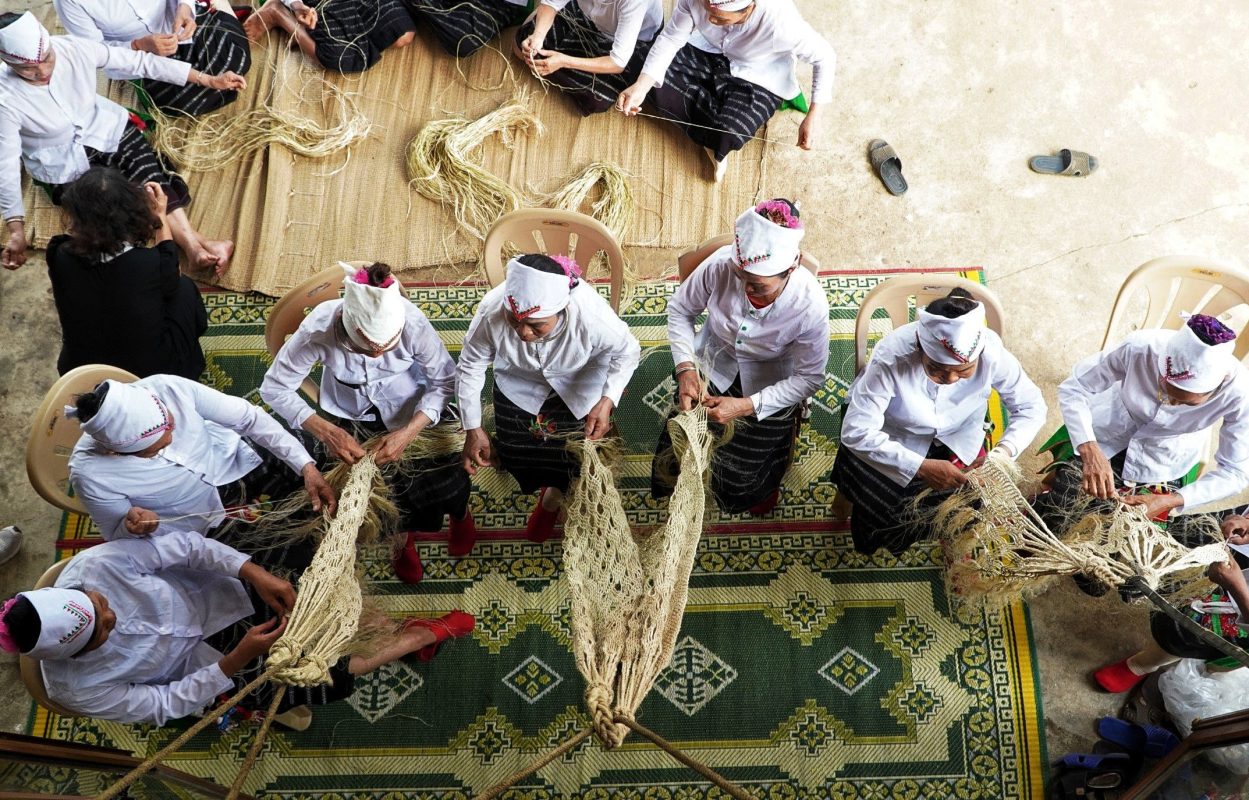
6. Hand-Knotted Body
For the next two weeks, the artisan creates the body. While often called “weaving,” it is actually a meticulous hand-knotted netting process. Using traditional “twist-weave” techniques, they interlock the ramie cords according to patterns called then (such as then 2, 3, 6, or 7).
Breathability: The weave is purposefully spaced to allow air to pass through. This utilizes ramie’s natural hollow-core structure, creating a cooling effect that synthetic fabrics cannot replicate.
The Signature: You may notice slight variations in the thread’s thickness. This is where a new strand was joined – a physical record of the artisan’s progress.
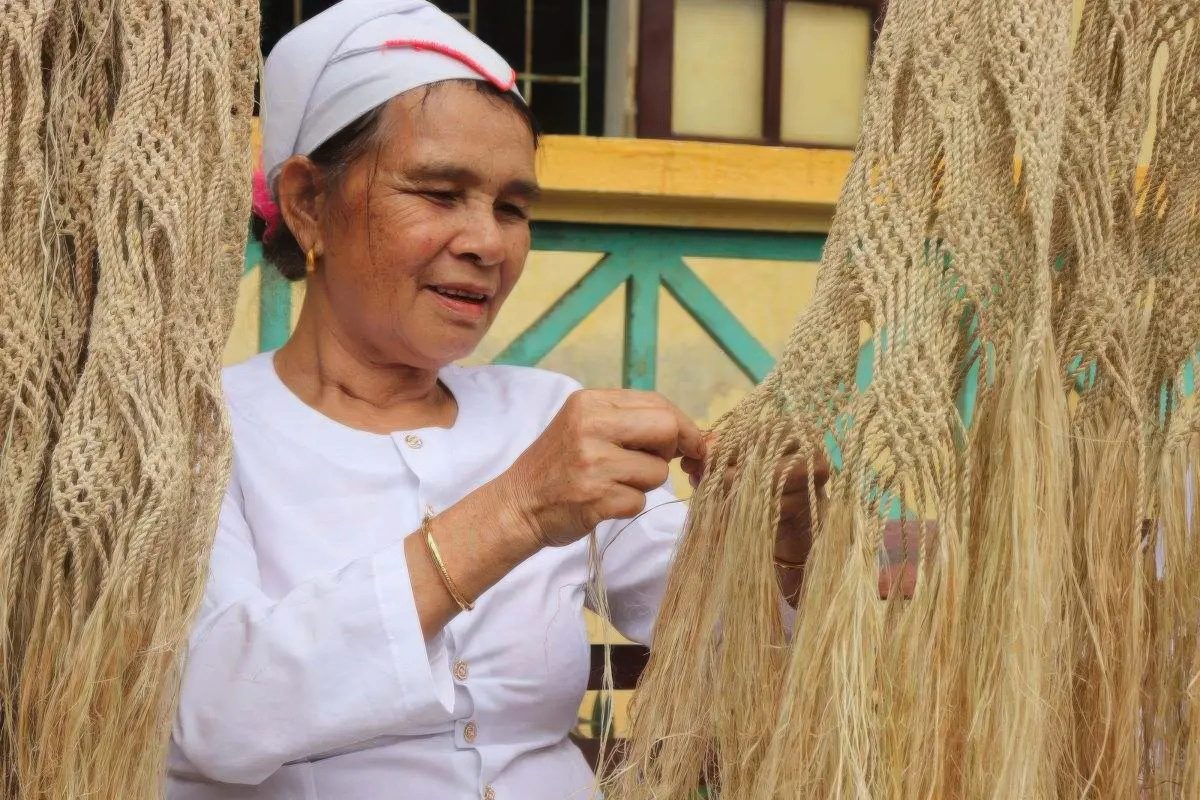
7. The Master’s Knot: Finishing the Tang
The final step is the most critical: finishing the tang. This is the gathered end and the side edges where all the weight is concentrated. The essence of a Thổ hammock lies in this intricate braiding. Each fiber is twisted and knotted so precisely that the joints are nearly invisible. This complex series of “locked” knots allows the hammock to hold hundreds of kilograms for decades. If this step is rushed, the entire structure fails.
Why 30 Days Matter
In a world of disposable goods, 30 days feels like an eternity. But when you lie in a finished ramie hammock, you feel the difference. You feel the cool breath of the fiber, the lack of chemical residue, and the unwavering strength of knots tied by a person who spent years perfecting them.
It is not just a hammock. It is a month of a human life, woven into a form that will last for years.
