

Material
What Is Ramie Fiber? Ancient Strength and Modern Sustainability in Vietnam
To understand a handwoven hammock at Handmadee, you must first understand the stalk it was pulled from.
We work with ramie (Boehmeria nivea) — not because it is a trend, but because it is honest. Known locally in Vietnam as cây gai, this perennial plant has been part of the human story for over 6,000 years, long before the arrival of synthetic fibers.
What Is the Ramie Plant?
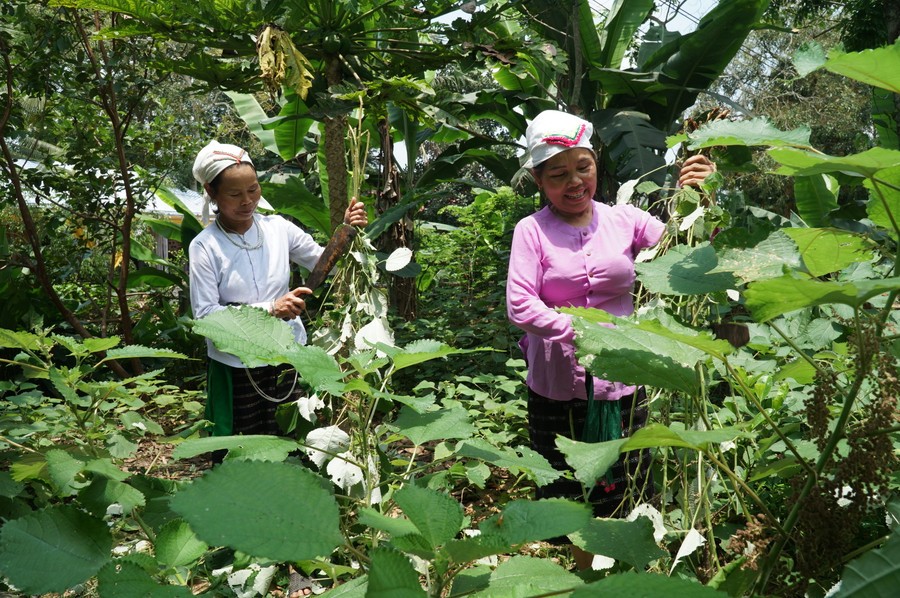
Ramie is a flowering plant in the nettle family. It thrives in the humid mountain districts and home gardens of Nghệ An, Vietnam — standing up to 2.5 meters tall, with heart-shaped leaves and distinct silver-white undersides.
Unlike crops that require constant replanting, ramie is a perennial. Once it takes root in the local soil, the same plant can produce fiber for up to 20 years. It grows on natural rainfall and sunlight, requiring no pesticides or chemical fertilizers.
In the villages of the Thổ people in Tân Kỳ district, ramie grows in household gardens and on hillside plots — tended by the same families who will eventually weave it. The plant and the craft have always occupied the same ground.
What Ramie Does for the Land
In the mountainous villages where it is grown, ramie serves the land as much as it serves the maker.
Soil restoration. Its deep root system prevents erosion on hillside plots and improves soil structure over time — important in a terrain where the ground is often steep and exposed.
Zero waste. After the fibers are extracted from the inner bark, the remaining leaves and stems are not discarded. They contain up to 22% protein and return to the earth as organic fertilizer or fodder for local livestock. Nothing from the plant is wasted.
Living soil. Because ramie requires no chemical intervention, the fields where it grows remain healthy ecosystems — clean water, intact soil biology, no residual contamination.
This is not a marketing claim. It is simply what happens when a plant has been grown the same way, in the same place, for a very long time.
The Fiber Itself
The usable fiber lives in the inner bark of the ramie stalk.
Ramie is recognized as one of the strongest natural plant fibers in the world. Its tensile strength is significantly greater than cotton — and unlike most natural fibers, ramie actually becomes stronger when wet. This quality made it the historical material of choice for fishing nets and maritime ropes before synthetic alternatives arrived. It resists rot, resists salt water, and holds under sustained load.
Beyond strength, ramie has a set of properties that matter for everyday use:
Breathability. The fiber’s hollow structure allows air to circulate freely. In a humid Vietnamese summer, a ramie hammock stays genuinely cool — the material does not trap heat against the body.
Naturally antibacterial. No chemical treatment creates this. It is intrinsic to the fiber — resistant to mold, mildew, and the bacteria that break down most organic materials in tropical climates.
Fully biodegradable. At the end of its life, ramie returns to the earth without residue. The same ground that grew the plant receives the fiber back.
From Fiber to Hand-Knotted Hammock
The transformation of ramie into a hammock is not a weaving process in the conventional sense.
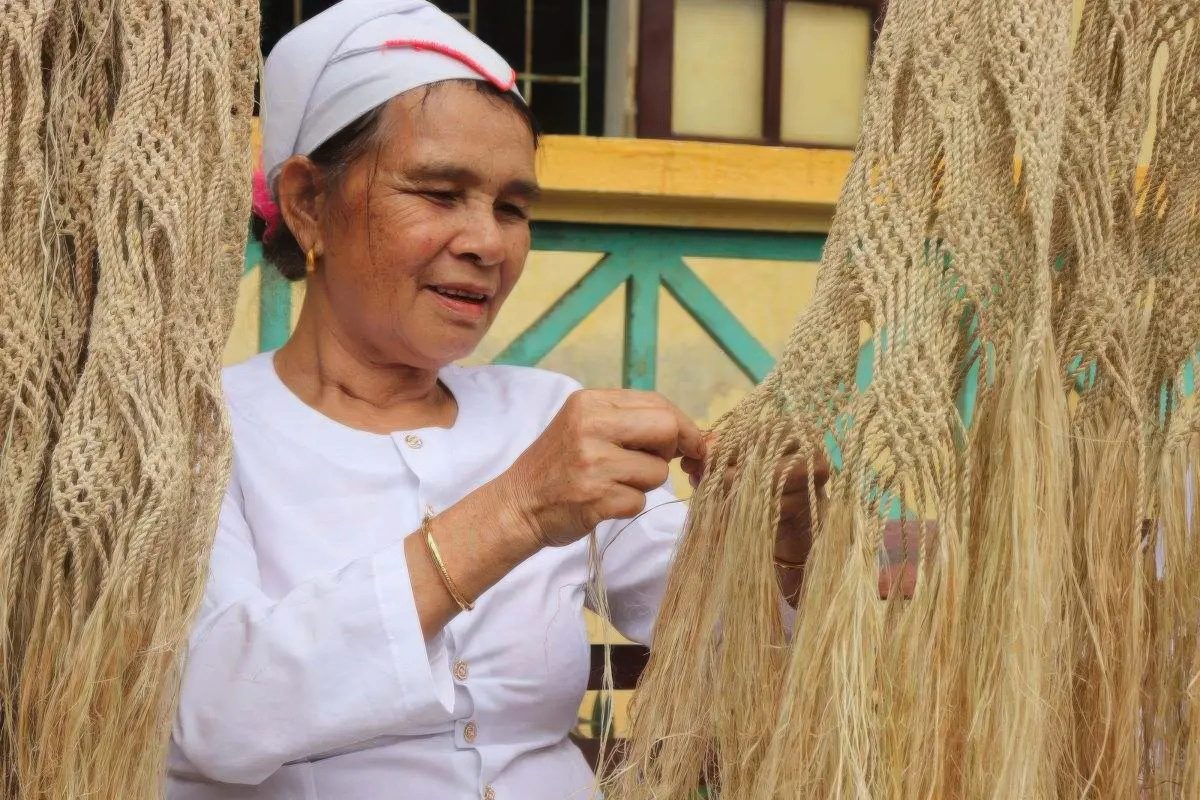
While the term “handwoven” is commonly used, the Thổ people of Nghệ An create their hammocks through a hand-netting and knotting process — meticulous, slow, and done entirely by hand. Each knot is tied individually. The resulting mesh is breathable and flexible, supporting the body without sagging, staying cool in heat, and holding its structure across years of use.
A single hammock requires approximately 3 to 4 kilograms of dried ramie fiber and takes around 30 days to complete.
The technique has remained consistent for generations — not because there is no other way, but because this way works.
One More Thing the Plant Gives
Beyond textiles, ramie leaves are an ingredient in bánh gai — a traditional Vietnamese glutinous rice cake. The leaves give the cake its deep black color and a subtle, earthy flavor.
This is a small detail, but it says something about the plant’s place here: ramie is not only a craft material. It is part of the food, the soil, the household, the culture. It has always been used completely — nothing left over, nothing wasted.
Why Ramie, Still
Today, as alternatives to synthetic and resource-heavy materials are sought globally, ramie is one of the oldest answers to a new question.
It is naturally antibacterial, moisture-wicking, and fully biodegradable. It grows without chemicals, restores the land it grows on, and produces no waste in processing.
At Handmadee, we use ramie because the Thổ artisans of Nghệ An have worked with it for generations — and because a material trusted for 6,000 years does not need to reinvent itself.
Every knot in a Handmadee hammock is tied from fiber grown in the same hills where the craft has always been practiced. That is what honest material looks like.
The ramie hammocks at Handmadee are hand-knotted by Thổ artisans in Giai Xuân commune, Tân Kỳ district, Nghệ An — Vietnam. Each piece takes approximately 30 days to complete.
See the Tho Ramie Hammock →
