

 VN
VNThere is a quiet certainty in these hands. They belong to a lineage of skill that has remained unchanged for centuries. Resting between them is Ramie – a fiber that has grown on the hillsides of Vietnam for as long as the Thổ people have lived there. It is used today for simple, practical, and unhurried reasons: it works, and it lasts.
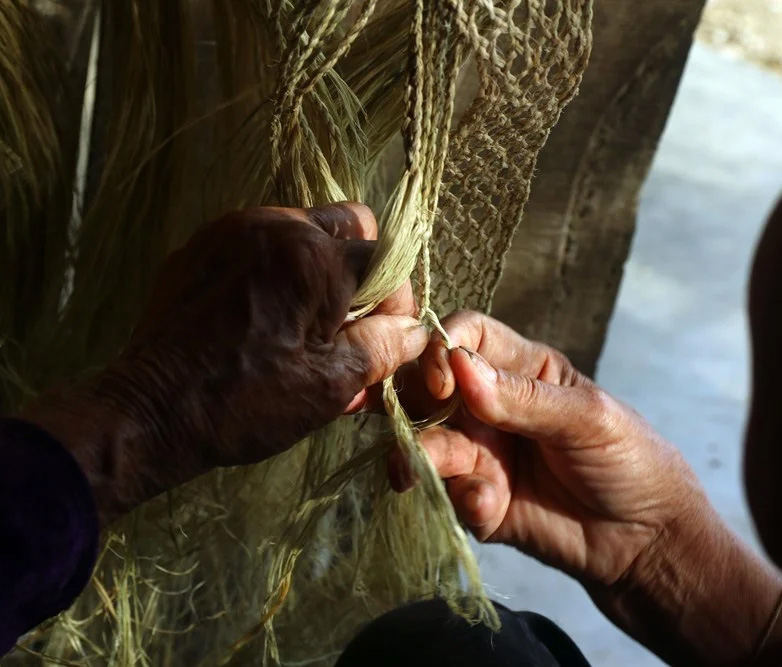
Rooted in the Earth: The Biography of a Plant
Ramie (Boehmeria nivea), or “cây gai” as it is known locally, is not an industrial invention. It is one of the oldest textile fibers in the world. Ancient Egyptians chose it to wrap mummies for one specific reason: its legendary resistance to decay.
In the highlands of Vietnam, the ramie plant grows naturally along hillsides and in small family garden plots. It is a perennial; once it takes root, the same plant can be harvested for up to thirty years without being replanted. It thrives on mountain mist and sunlight, requiring no pesticides and no intensive irrigation. It asks only for patience.
The ivory hue you see in the finished fiber – the color of morning light – is the result of a purely manual process. After harvest, the stalk is stripped by hand to reveal the inner bark. These raw fibers are washed and sun-dried in the open air until they reach the perfect tension. There are no industrial shortcuts here; only meticulous attention determines the quality of the thread.
The Skill of the Hand: Where Time is Value
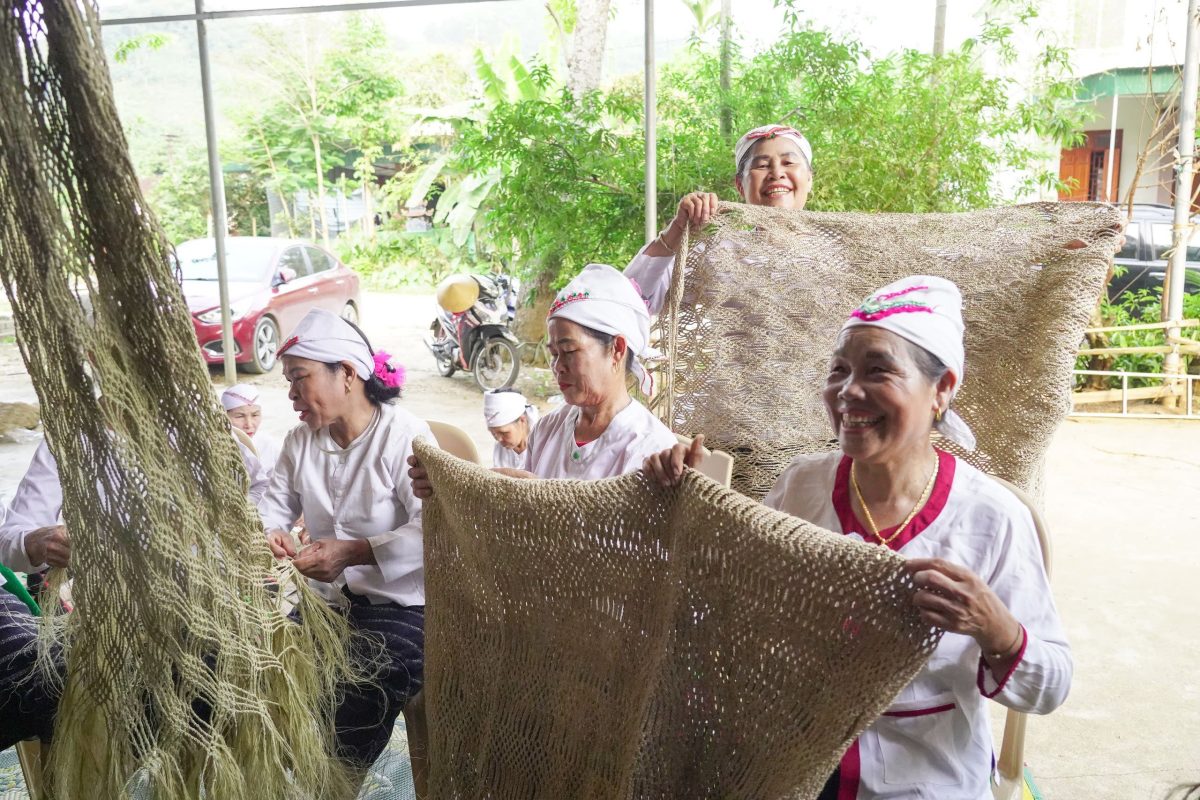
Ramie fiber is naturally firm and structured, meaning it cannot be handled casually. Working with it requires a level of skill refined over generations. A Tho woman does not learn to weave from a manual; she learns by observing the rhythm of her mother’s hands, feeling the tension of the thread between her fingers long before it takes shape on the loom.
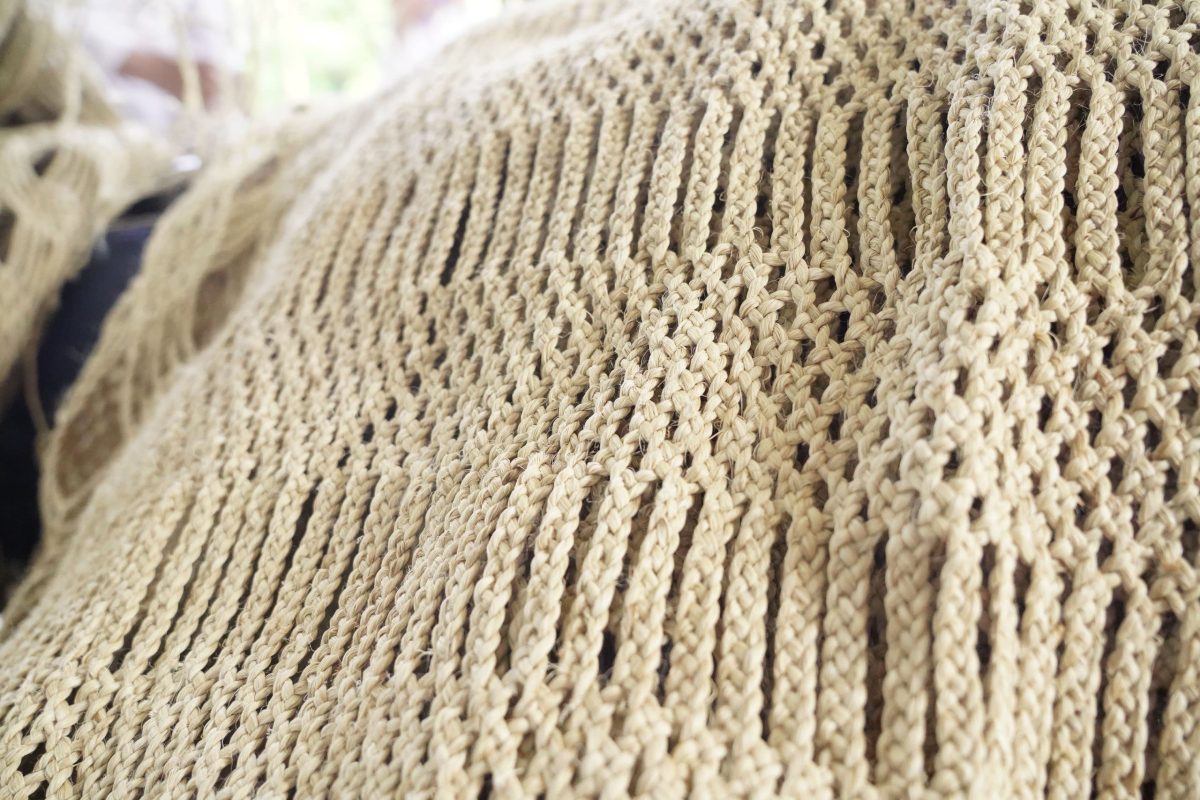
Every ramie hammock at Handmadee is hand-knotted and woven over the course of 15 to 30 days. The most difficult part is ensuring the tension of the knots is perfectly uniform – a detail a machine might overlook, but a hand cannot. The subtle variations in the fiber are not flaws; they are the “signature” of the maker, proof that this object carries a soul.
Why the Tho People Have Never Changed Materials
The answer lies in a deep, generational understanding of the environment. Centuries ago, seeing the ramie plant thrive in the wild forests surrounding their villages, the Thổ people recognized its resilience. Through generations of observation, they mastered the art of turning a rugged stalk into a refined textile. It was never just a technique – it was a way to live in harmony with the land.
- Exceptional Strength: Ramie has greater tensile strength than almost any other plant fiber. It holds weight without stretching or fraying at stress points.
- Sensory Breathability: The hollow structure of the fiber allows air to pass through freely. In the humid heat of summer, lying in a ramie hammock offers a genuine cool – not the superficial shade of a synthetic, but a deep, structural breathability.
- Naturally Antibacterial: Ramie resists mold, mildew, and bacteria without any chemical treatments. A well-cared-for hammock can last a decade of daily use.
- Returning to the Earth: At the end of its long life, ramie is completely biodegradable. It returns to the soil as nutrients for the very ground that grew it.
Encountered at Handmadee
Ramie, on its own, is a humble plant-based material. What gives it meaning is the human connection. In the hands of Thổ artisans in Vietnam, it becomes part of a process involving time, repetition, and quiet intention.
We started Handmadee to introduce these makers to you. Not to “save” a disappearing craft, but to connect you with objects that carry the breath of the earth and the heart of the hands that made them.
When you are ready for a nap that isn’t rushed, our ramie hammocks are here, waiting.
